Ethical Dog Breeding
As we show and work our dogs, we are on a never-ending quest for the “perfect” Siberian. Occasionally, we have a litter to combine the best traits from both parents and ultimately improve the breed as a whole.
This is something we take very seriously — and it should be. This page explains everything we do to breed as ethically as possible and give every puppy the best start in life.
Breeding
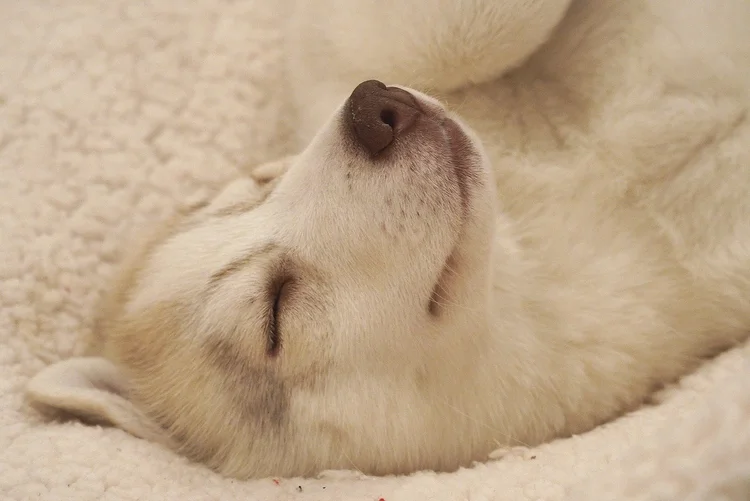
Our bitches must be at least 2 years old before we consider breeding from them. By this age, Siberian Huskies have fully matured — breeding any younger puts unnecessary stress on their reproductive systems. For similar reasons, we never breed back to back; there must always be at least a 1 year gap between litters from the same dam.
We plan every litter carefully in advance, selecting the stud dog to complement the dam. Breeding only happens when we wish to keep a puppy for ourselves. The effort and cost of raising a litter — and providing lifetime support to owners — means there is no financial gain for us to do so. Our motivation is the future of the breed, not money.
Type, temperament and health are our three guiding priorities. Our Huskies must look like Huskies and behave like them too. As a team sled dog, the Siberian Husky should never show aggression — we remove any dog that displays this from the breeding programme. This is a healthy breed, and we aim to keep it that way.
Health Tests
Breed clubs recommend three genetic health tests for Siberian Huskies: Hip Dysplasia, Glaucoma, and Hereditary Cataracts.
Hip scores only need checking once in a dog’s lifetime. Each hip receives a score out of 53, giving a combined total out of 106 — lower is better. The breed average for Siberian Huskies is just 7. This means the breed has very healthy hips overall. A low score doesn’t guarantee a dog will never develop hip dysplasia. It simply means the cause is unlikely to be hereditary.
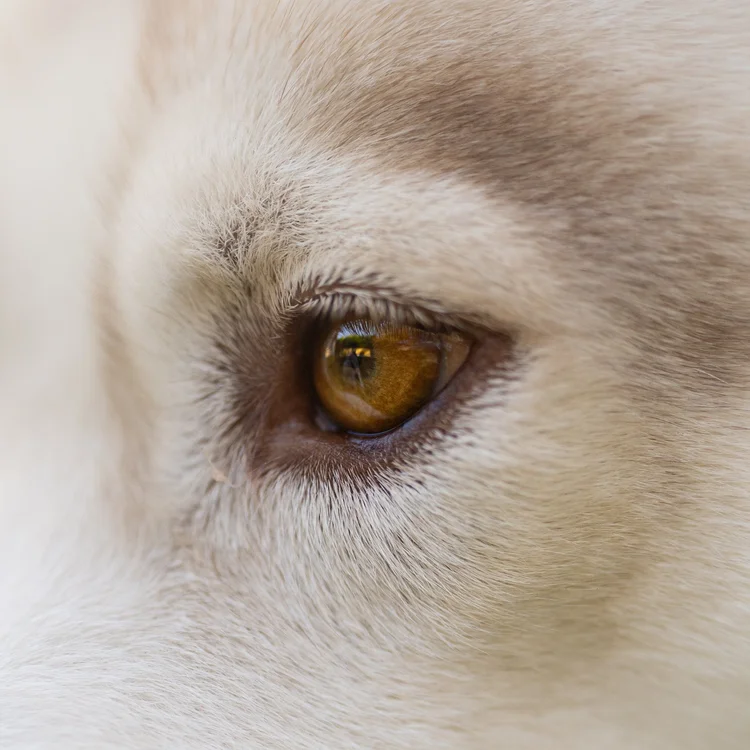
Eyes need more frequent checks — annually for cataracts and every three years for glaucoma. Vets record cataract results as either “affected” or “unaffected”. Checking pedigree history is also important, as the dog’s own score alone cannot reveal a predisposition. For glaucoma, vets grade the drainage angle from 0–3. Grade 0 is unaffected; 1 is mildly affected; 2 is moderately affected; 3 is severely affected. Dogs graded 3 should not enter breeding programmes. Grade 2 dogs should only pair with grade 0. These grades indicate likelihood, not certainty — a grade 0 dog could still develop glaucoma, and a grade 3 dog may never do so.
We carry out all recommended tests as frequently as required. This ensures complete records exist for every dog in our programme. These records are invaluable for safeguarding the health of future generations.
Additionally, all our dogs undergo Embark genetic testing. This reveals the coefficient of inbreeding and any other potential health conditions. It also contributes to broader research into dog genetics.
Whelping
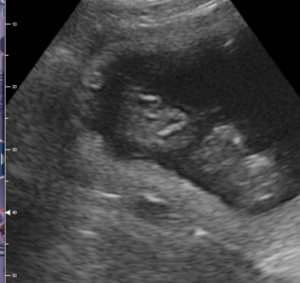
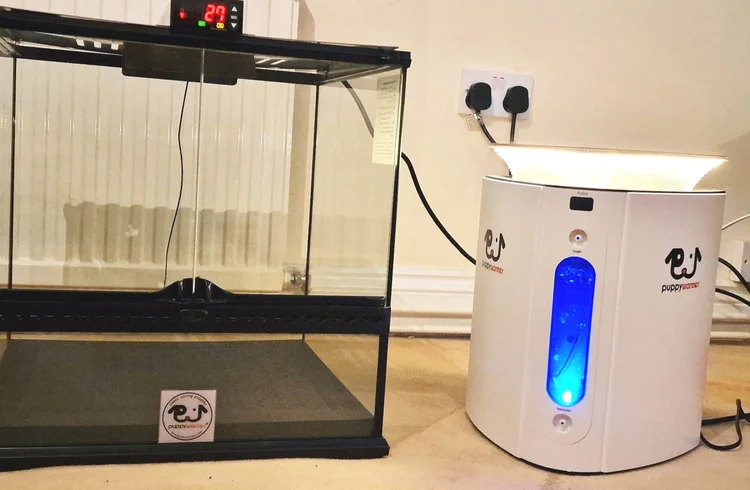
Ensuring a safe whelp for both mum and pups is our top priority, and we have invested in the latest technologies to make this possible.
Our setup includes the PuppyWarmer Incubation & Oxygen system. This provides newborns with a perfect warm, oxygen-rich environment. Newborn pups struggle to digest the life-saving colostrum in their mother’s milk if they are cold, so keeping them warm in the incubator allows them to absorb antibodies and calories more effectively.
The incubator is also invaluable for small for gestational age puppies. These pups cannot regulate their own body temperature as well as their siblings, and as a result, their survival rate is significantly increased with incubator support.
Socialisation
All our puppies are raised in an active home, exposed to the usual sights, sounds and scents they will encounter throughout their lives. To build confidence and self-sufficiency, we follow the Puppy Culture programme, which is designed to help pups become well-adjusted members of the family.
The first 12 weeks of a puppy’s life are critical — their brains are like little sponges, absorbing everything around them. During this time, we provide developmentally appropriate enrichment, puzzles and socialisation to shape their behaviours for life. Because the first 8–10 of those weeks are spent with us, having a structured programme in place matters enormously.
New Homes
We start the crate and toilet training here, and all puppies are sent home no sooner than 10 weeks old with puppy packs designed to help you continue their socialisation and cover their basic needs.
- A bag of the food the puppies have been eating
- A blanket with mums scent
- A few toys
- A collar and leash
- Some tasty treats!
- Poo bags and holder
- All the paperwork (KC registration, info on parents & some helpful information)
All puppies leave micro-chipped and with 4 weeks free insurance courtesy of the Kennel Club
Lifetime Support
As with any ethical breeder, we provide lifetime support for all our homebred puppies. If there is anything you ever need, from guidance on nutrition to a shoulder to cry on when the adorable fluff ball has eaten your favourite pair of socks again we will be there.
We will always take back puppies for whatever reason. Some times circumstances change and that’s an unfortunate fact of life. Whether re-homed or a new permanent resident of the Lyrvid crew, you will never find our dogs in rescues.
Red Flags
Unfortunately not all breeders are ethical, here are some things to look out for that might be a sign that the breeder you are looking at is an unethical one.
- Puppies are available year round – ethical breeders have few litters and only when they intend to keep a puppy. They often have waitlists
- No proof of health testing – they should be able to show all certificates and if the dogs are KC registered you will be able to look up their results
- Selling dogs on “guardian home” contracts. This is purely a way for them to expand their breeding operations without the added costs of ownership
- Dogs are not shown or worked – ethical breeders breed to produce dogs that fit the breed standard and can do the jobs they were originally bred for, not just for breeding sake
- Charges more for specific colours or sex – ethical breeders do not breed for “rare” colours, these are often out of standard and in the case of many breeds indicate impure bloodlines. Merle and brindle do not occur in purebred huskies!
- Charges more for breeding rights
- Cannot explain why a specific stud dog was chosen for the bitch. Ethical breeders breed to better the breed, they should be able to justify their choice in stud
- Only ever uses in-house studs. The best dog for your bitch is rarely one that you own, back yard breeders and puppy mills use in-house studs because it does not incur a stud fee
- Photos of the dogs are candid cute snaps – ethical breeders will showcase the structure of their dogs and images of them competing